
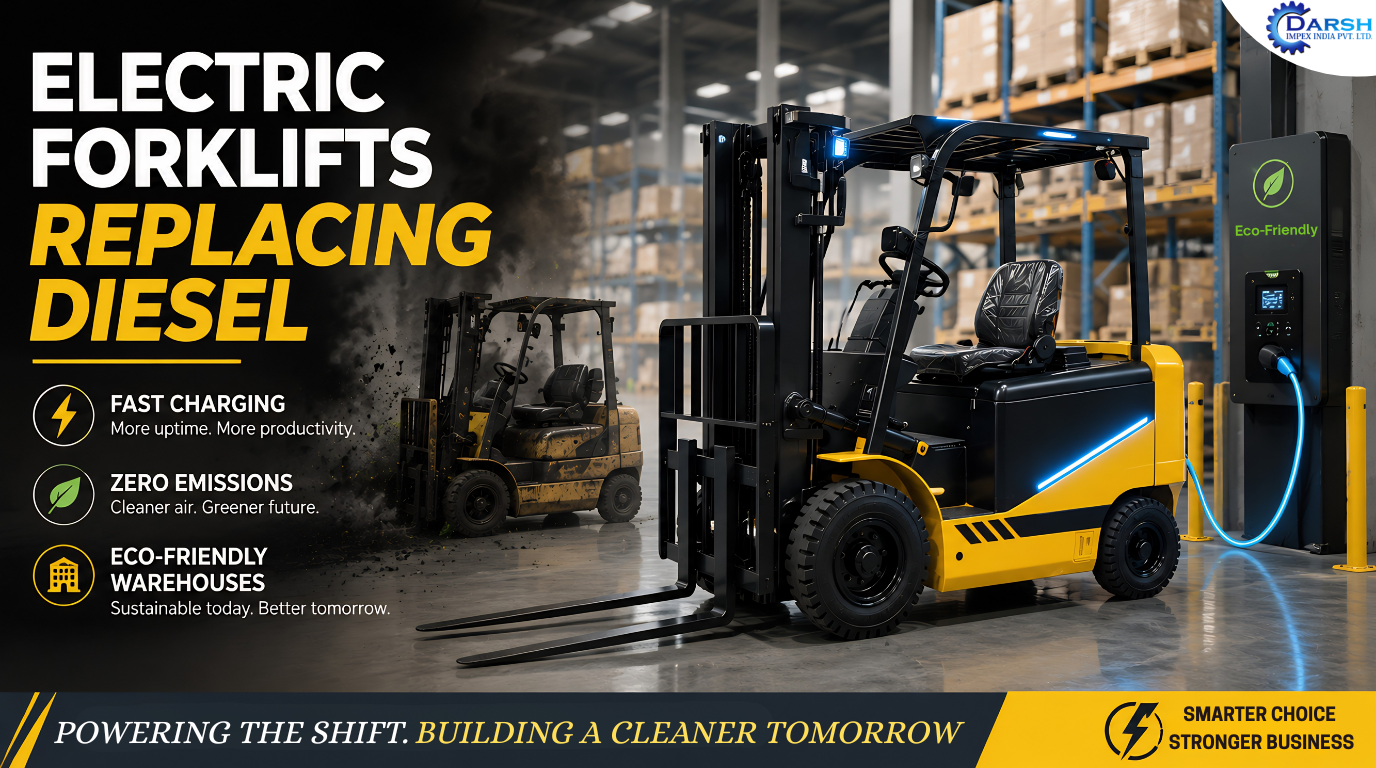
Electric forklifts powered by batteries are rapidly replacing diesel-powered forklifts in the material handling industry. Electric vehicles are being adopted by factories, warehouses, and logistics facilities to reduce their operating costs, improve efficiency, and achieve cleaner operations. Electric forklifts are becoming the primary choice as companies prioritise contemporary warehouse management and sustainability.
Why Diesel Forklifts Are Being Replaced
Because of their strength and longevity, diesel forklifts have been used widely for many years, but they also have a lot of disadvantages.
High Fuel Prices
Increased warehouse operating costs are a result of rising diesel prices, particularly for companies that operate large fleets of forklifts.
Emissions and Pollution
Diesel forklifts have a negative influence on the environment and warehouse air quality because they produce smoke and other toxic chemicals.
Heat and Noise
Diesel engines produce a lot of heat and noise, which makes warehouse workers’ jobs challenging.
High Maintenance
Frequent machine maintenance, oil changes, and service increase operating expenses and downtime.
Many businesses are switching to electric forklifts as a result of these problems.
Batteries which are used in modern electric forklifts have increased the efficiency and dependability of electric warehouse machinery.
Fast Charging
Compared with traditional batteries, batteries charge much faster. In order to save downtime, forklifts can even be partially charged during breaks.
Longer Battery Life
Over time, these batteries will require fewer replacements because they are capable of handling thousands of charging cycles.
Low Maintenance
Battery-operated forklifts requires low maintenance as compared to diesel-operated forklifts
Consistency in Performance
Electric forklifts help operators operate more productively by providing steady power throughout the shift.
Eco-Friendly and Emissions-Free Warehouses
Logistics firms and warehouses are becoming more focused on sustainability. Electric forklifts support eco-friendly operations because they produce zero emissions during use.
Improved Air Quality
Warehouses become safer and healthier for workers who spend a lot of time indoors when exhaust gases are reduced.
Decreased Carbon Footprint
Businesses may reduce greenhouse gas emissions by switching to electric forklifts from diesel fleets.
Implementation of Environmental Regulations
Electric forklifts are a future-ready answer, as many businesses are implementing stricter environmental standards.
Reduced Operating Expenses
Electric forklifts help firms save money over time, even if they may initially cost more.
Reduced Energy Costs
In general, charging batteries is less expensive than frequently buying diesel fuel.
Lower Maintenance Expenses
Because they have fewer moving parts, electric forklifts require less maintenance and cost less for repairs.
Improved Efficiency
Operators may move materials more effectively with the support of accurate controls, simple handling, and smooth operation.
Fast Charging Increases Productivity
Fast charging technology is one of the primary benefits of battery-operated forklifts.
Forklifts may be instantly charged during idle time or shift breaks in warehouses through the use of opportunity charging. This removes the need to change batteries, allowing forklifts to run consistently for several shifts with minimal downtime.
Quiet and Comfortable Operations
Diesel forklifts are far more noisy than electric ones. Reduced noise levels enhance communication within warehouses and improve workers’ working environments.
Additionally, the decreased production of heat contributes to the maintenance of comfortable interior environments, particularly in small spaces.
Electric fleets are preferred by smart warehouses.
Automation and technological advancements are transforming modern warehouses. Warehouse automation software, battery monitoring devices, and fleet management systems may all be integrated with electric forklifts.
Electric forklifts are being rapidly adopted by industries including manufacturing, e-commerce, food processing, pharmaceuticals, and logistics because of their clean operation, reduced maintenance requirements, and energy efficiency.
As warehouses continue focusing on sustainability, efficiency, and smart operations, electric forklifts powered by batteries are becoming the future of material handling equipment.